Northern lights: where and when it is worth going
Darkness calculated 24 October 2026 with Astronomy Engine 2.1.19 (MIT licence).
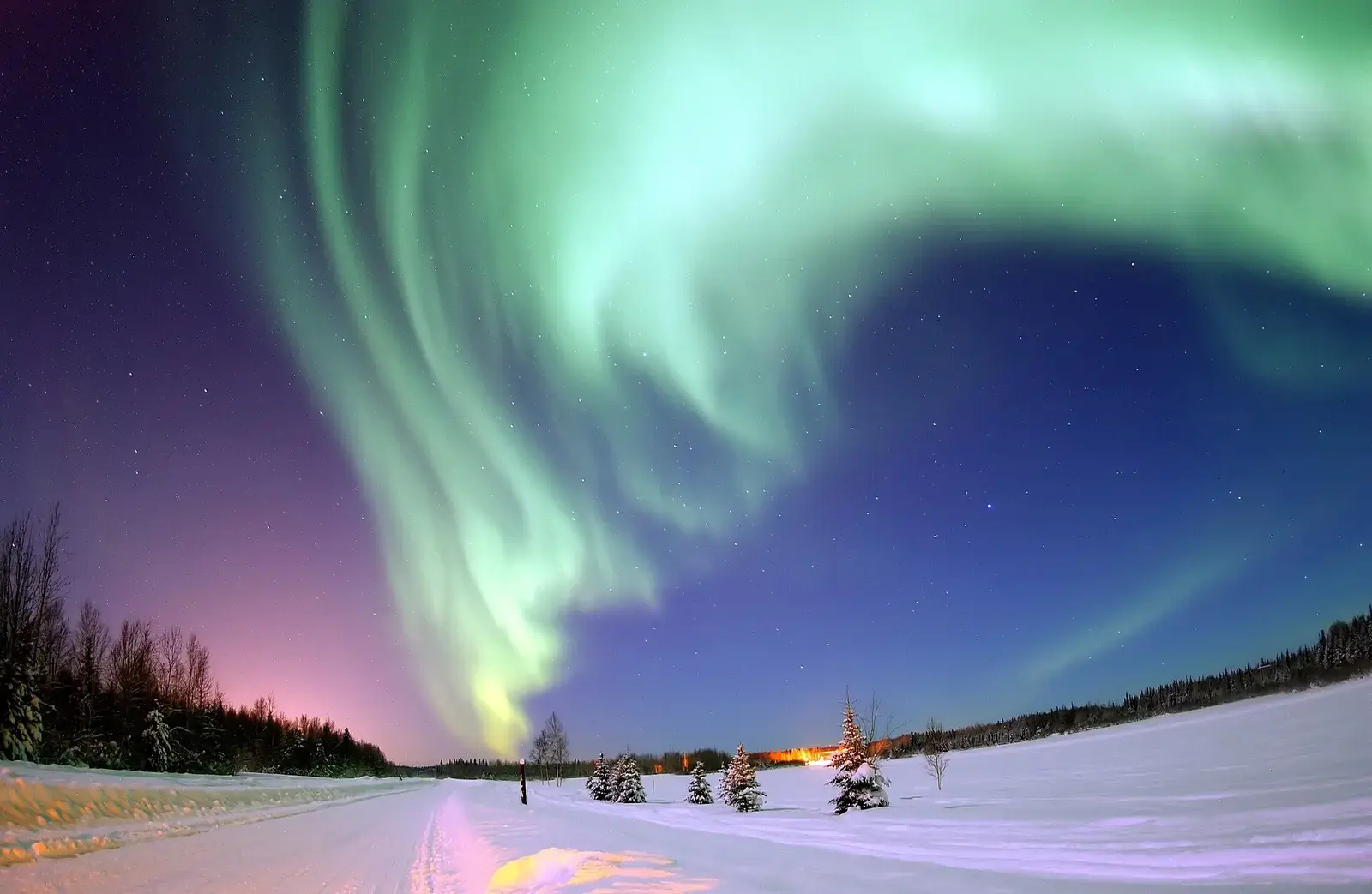
To see the aurora you need three things at once: an active night, a dark sky and no clouds. Activity comes from the Sun and is forecast a few days ahead. Clouds are local and last-minute. Darkness is the one you can plan months ahead, so that is what we calculated for each place.

Seven places, and when they are dark enough
Bars show hours of darkness on the 15th of each month, with the Sun more than 12° below the horizon. Green months have at least 4 dark hours.
- Tromsø
Norway. Dark enough September to March; 15.8 dark hours in mid-December.
- Abisko
Sweden. Dark enough September to March; 15.5 dark hours in mid-December.
- Rovaniemi
Finland. Dark enough September to March; 15.1 dark hours in mid-December.
- Reykjavík
Iceland. Dark enough September to March; 14.8 dark hours in mid-December.
- Fairbanks
Alaska, United States. Dark enough September to March; 14.8 dark hours in mid-December.
- Yellowknife
Canada. Dark enough September to April; 14.4 dark hours in mid-December.
- Inverness
Scotland, United Kingdom. Dark enough August to April; 13.8 dark hours in mid-December.
Get a note when it is worth going out
A short email before an eclipse, a strong meteor shower or a dark week worth planning for. No more than a few a month.
What this means for planning
- In June and July none of these places gets real darkness, so there is no aurora to see however active the Sun is. May is too light everywhere on the list except, briefly, Inverness.
- Midwinter has the longest nights, and so the most hours in which a display can happen. It is also the coldest time.
- NOAA’s Space Weather Prediction Center says the best seasons for aurora are around the equinoxes, in September and March.
- Plan around the New Moon if you can. A full Moon does not stop the aurora, but it makes it look fainter.
- Stay several nights. Activity and clouds both change from night to night, and one night is a gamble.
How to read the aurora forecast and the Kp index, and what to check before you book a tour.
How we worked it out
For each place we calculated the Sun’s height every five minutes through the night of the 15th of each month in 2027, and counted the time it spends more than 12° below the horizon. Faint aurora needs a darker sky than that, and a strong display can show in brighter twilight, so treat the bars as a guide to the season, not a promise. Other years are almost the same.
Sources
- Our calculation, Astronomy Engine 2.1.19 (MIT licence), run on 24 October 2026.
- NOAA Space Weather Prediction Center, Tips on viewing the aurora: seasons, darkness and the Moon.